Understanding BOM management: the backbone of efficient product development
In the complex world of product development, the smallest error can cascade into costly rework. The Bill of Materials (BOM) is the strategic asset that holds it all together — ensuring every part, component, and material required to manufacture a product is accurately documented and available when needed. Almost every complex engineering product has a BOM. But whose job is it to manage? How many people use it? And do they have confidence the information is accurate and up to date?
What is BOM management?
At its core, a BOM is a comprehensive list of raw materials, components, assemblies, sub-assemblies, and quantities needed to manufacture a product. BOM management is the creation, maintenance, and control of that critical document across the whole product lifecycle — from initial design through production and into service and end-of-life.
Effective BOM management ensures every item is correctly identified, sourced, and available at the right time. It isn't just data accuracy; it's making sure every stakeholder — engineers, designers, procurement, suppliers — is working from the same, up-to-date version of the BOM.
The role of BOM attributes
A major part of BOM management is managing attributes — the properties and metadata that describe parts within the BOM. Attributes include part numbers, materials, revision levels, cost, weight, and other vital details that help identify and categorise components. Managing them properly is essential: it's what keeps the BOM accurate, makes attribute statuses easy to track across the lifecycle, and defines how and where parts are used within a product. That last piece has direct consequences for timing, manufacturing, and assembly.
How BOM management fits into product data management (PDM)
PDM is the system that manages and tracks all data relating to a product's development, from concept through manufacturing and eventual disposal. BOM management is a critical building block of PDM — it's the database for the physical product that every other data flow and process relies on.
Within an efficient PDM process, the BOM is well-integrated with other vital product data: CAD designs, engineering change management, product variant configuration. That integration ensures upstream changes to product intent, design, or attributes are reflected in the BOM — and then flow through to the downstream databases — keeping every department aligned. The result: cleaner communication, fewer errors, and everyone involved in the product lifecycle on the same page.
Why BOM management matters
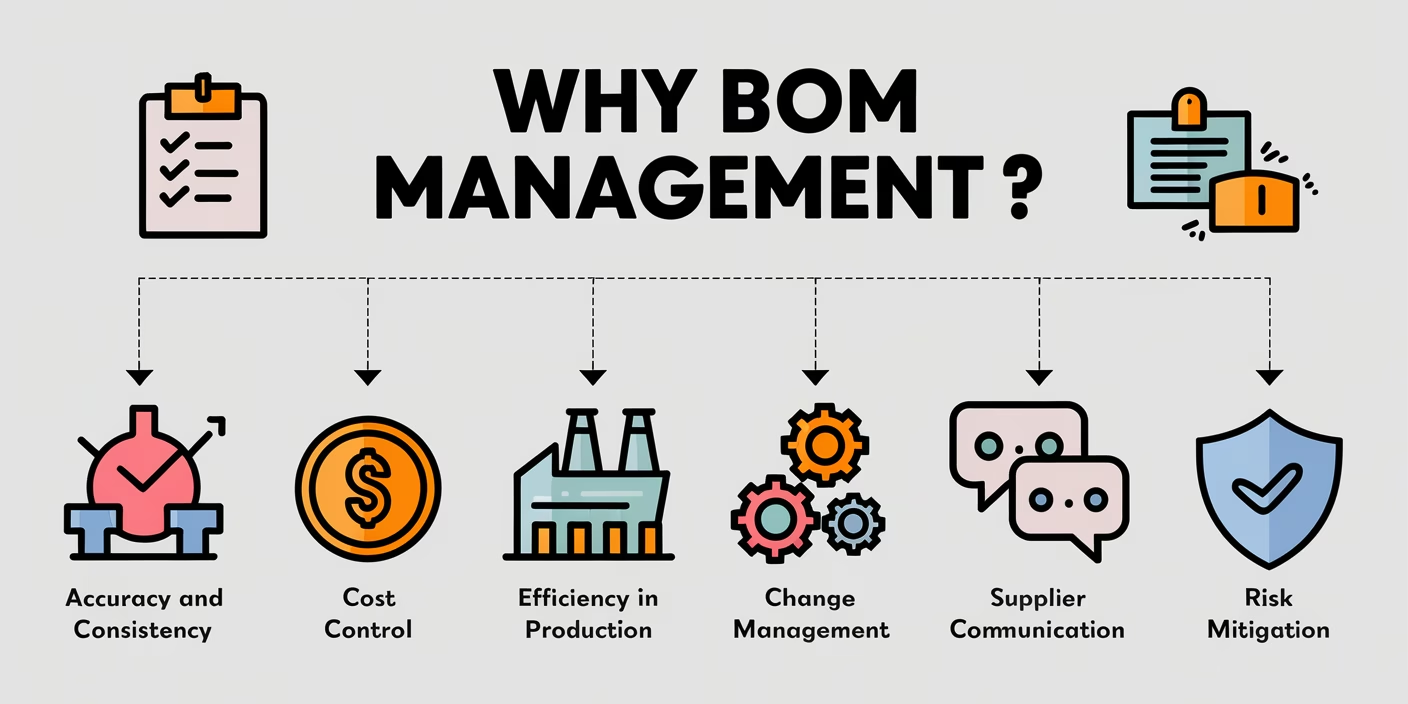
The importance of BOM management can't be overstated. It's one of QR_'s largest service offerings globally for a reason. The value of good BOM management is hard to quantify directly — so at QR_ we usually measure the opposite: the cost of bad BOM management on programme expenditure and lateness. What good BOM management does for the business:
- Accuracy and consistency — A well-managed BOM ensures every component is correctly specified — reducing the risk of errors that lead to production delays or wrong orders. Consistency across departments means every stakeholder is working with the most current information.
- Cost control — Poor BOM management results in purchasing wrong parts, over-ordering materials, or last-minute expedited shipping costs. An accurate BOM avoids all of those unnecessary expenses and keeps programmes on budget.
- Efficiency in production — An accurate BOM streamlines the manufacturing process — ensuring all necessary components are available when needed. Less downtime, smoother and faster production cycles.
- Change management — Product designs are rarely static — they evolve over time. Good BOM management means updates are promptly reflected in the BOM and communicated to all relevant parties.
- Supplier communication — Clear, accurate BOMs improve communication with suppliers — they understand exactly what's required and can deliver the right components on time.
- Risk mitigation — Accurately tracking attributes like revision levels, materials, and part numbers avoids the risks of using outdated or incorrect parts — the kind of thing that otherwise shows up as costly rework or product recalls.
Our process for managing a BOM
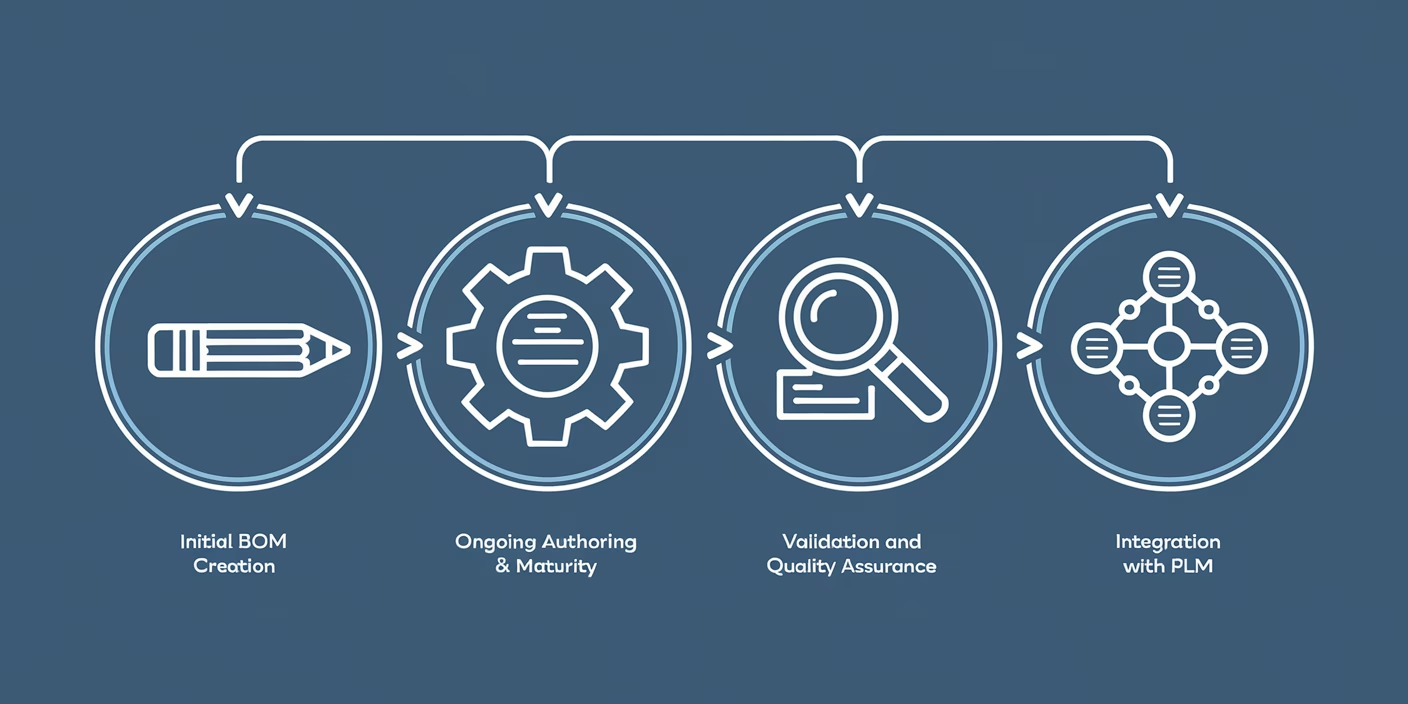
Effective BOM management is crucial to the success of any product development process. Whether you're starting from scratch or refining existing processes, our approach is designed to ensure accuracy, streamline data flows, and minimise risks across the lifecycle. Depending on your situation, some stages will matter more than others — we work with BOMs of all shapes and sizes and tailor our approach accordingly.
1. Initial BOM creation
If you're in the early stages of product development, we can assist in creating a detailed BOM from the ground up. We collaborate closely with engineering and design teams to identify and document every component, material, and assembly required — the initial BOM that serves as the foundation for every subsequent stage.
For clients with an existing but incomplete or inaccurate BOM, we conduct comprehensive BOM validation — filling in gaps and correcting errors to make the BOM robust and reliable.
2. Ongoing authoring and maturity
Even after your product is set up in your BOM system, BOM management doesn't stop. We offer authoring services to keep the BOM current with required changes, ensuring the prototype and production process stays smooth and efficient.
If the BOM has become unfit for requirements, we can conduct a full review and bring it back up to standard — implementing a maturity progression schedule to keep it accurate and functional for ongoing programme requirements.
3. Validation and quality assurance
We provide a rigorous validation framework to ensure the BOM is accurate and complete before production. That means working hand-in-hand with engineering teams — cross-referencing the BOM against design specifications, part numbers, and supplier information to identify and correct discrepancies.
For clients with known BOM issues or inconsistencies, we offer a thorough audit and validation service. We put a process in place to identify and rectify errors, and we provide at-elbow support to engineers — so the BOM becomes a reliable foundation for production.
4. Integration with PLM
If you're implementing or upgrading a PLM system, we can ensure your BOM is fully integrated. That alignment with other critical product data — CAD files, engineering changes — means updates are automatically reflected across every team.
For clients whose BOM isn't yet integrated into their PLM system, we facilitate the migration — connecting the BOM seamlessly with existing systems and processes.
In short
Whether you're starting from scratch or refining an existing BOM, building one complex product or many simpler products, comprehensive BOM management services are designed to meet your specific context. The objective is consistent: a BOM that's accurate, up-to-date, and fully integrated into your product development process — so you avoid the costly corrections and launch with confidence.